

4.3 min read
Calendered paper: the everyday object hiding 1 key physics principle
Calendered paper often ends up as something as small as a muffin cup, the kind you crumple up and toss without a second thought. Yet behind that unassuming piece of paper sits a small case study in mechanics, engineering, and materials science.
Greaseproof paper, defined properly
Let’s be precise from the start: this article talks about greaseproof paper as it’s used in industrial bakery packaging. The same term shows up in other industries with different technical meanings, so we’re narrowing the lens on purpose.
In the baking world, greaseproof paper is valued for one thing above all: its ability to hold back oil and grease. That single property is what lets it wrap, line, and contain fatty or oily food without turning translucent, soggy, or weak.
Two roads to the same result
Paper doesn’t become greaseproof by accident, manufacturers get there through either a chemical treatment or a mechanical one. We covered the chemistry side (PFAS and PFAS-free solutions) in an earlier article. This time, the spotlight is on the mechanical route: calendering.
Inside the calendering process
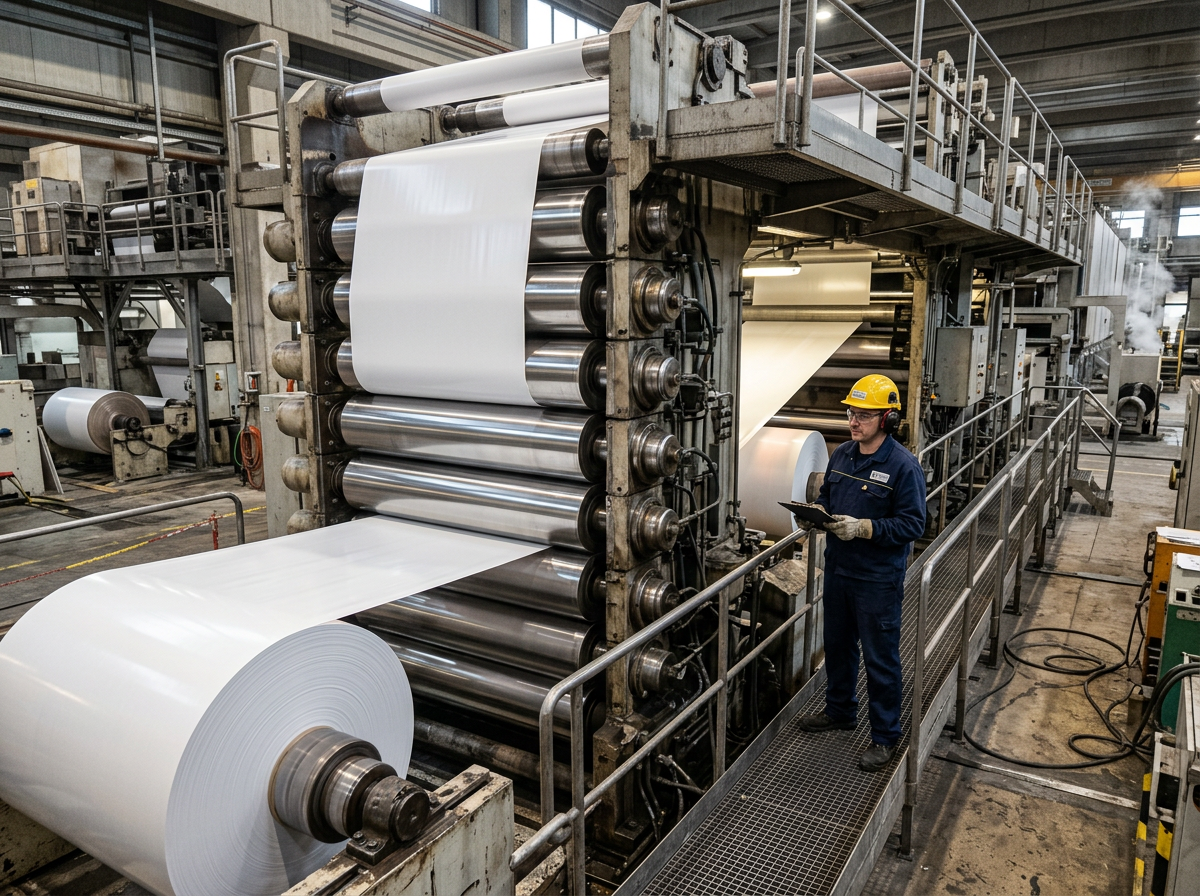
Calendering is essentially paper going through a workout. The sheet is fed through a stack of polished metal rollers under heavy pressure, sometimes with added heat. That pressure squeezes the fibers closer together, flattening the surface and shrinking the paper’s porosity.
Less porosity means less room for grease and oil to travel through. It’s a purely physical fix, no coating, no chemical barrier, just fibers packed tightly enough that fat molecules can’t find a way in.
Where it all started
Long before rollers and steel, papermakers smoothed sheets by hand, hammering them flat or squeezing them between polished metal plates. It was slow, and results varied from batch to batch.
Modern paper mills replaced that manual labor with continuous rolling systems. Rollers are typically cast iron or steel, gently tapered so pressure spreads evenly across the sheet, and some are heated to protect the paper’s thickness and rigidity while it’s being compressed.
Calendered vs. supercalendered: what’s the actual difference?
This is the distinction that trips up a lot of people:
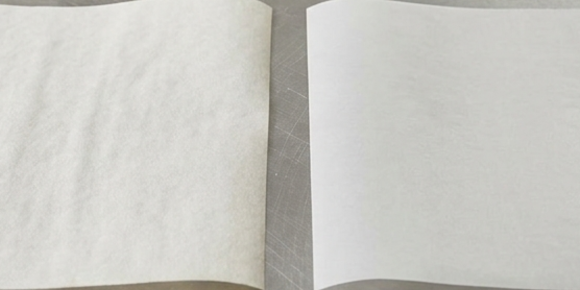
- Calendered paper goes through hard rollers as one stage of the normal production line: nothing extra, nothing separate. You’ll typically find this grade in publishing and printing.
- Supercalendered paper gets a second, more demanding pass. It’s run through alternating hard and soft rollers (steel paired with fiber-covered rollers), and this happens afterward, in its own dedicated unit.
That extra pass is what gives supercalendered paper its glossier finish, its greater smoothness, and, crucially for us, its grease resistance. It also improves print quality, since a smoother surface holds finer detail.
Calendered paper vs Supercalendered paper
At Ecopack, attention to detail like this is exactly what shapes the way we choose our packaging materials. Whether it’s the fiber structure, the finish, or the barrier properties of the paper we use, we look closely at how each of these factors affects performance on the production line and quality on the shelf.
Why any of this matters for shelf life
None of this is just a manufacturing footnote. A paper’s grease barrier is directly tied to how a baked good, a fried item, or any oily product looks and feels days after it’s packaged. Good greaseproof paper keeps food from going soggy, keeps grease from bleeding through, and helps preserve texture, appearance, and flavor for longer.
One more thing before you go
Here’s a detail that surprises most people: supercalendered paper isn’t only useful in the kitchen. Its dense, compressed structure gives it dielectric properties, meaning it resists the flow of electric current. That’s why the same paper engineered to stop grease is also used as insulation in electrical components.
Same material, two completely different jobs.
Found this useful? Let us know directly through our LinkedIn company page!


 Ecopack Italy
 Ecopack Brazil
 Ecopack Canada
 Ecopack India
 Ecopack Tunisia


