
3.5 min read
Industrial bakery sanitation: 4 hidden causes of downtime
In industrial bakery, every production manager knows the moment well: the line stops, the ovens cool down, and the cleaning team steps in. Industrial bakery sanitation is non-negotiable. It protects food safety, prevents cross-contamination and keeps equipment running reliably.
But there is a trade-off that is rarely discussed openly: to clean a line, you have to stop it. And every minute of downtime is a minute of lost output.
The cost of stopping a production line
In industrial bakery sanitation, a stop is much more than the time spent washing. It includes:
- shutting down and cooling ovens and equipment
- disassembling, cleaning and sanitizing components
- drying, inspection and hygiene checks
- restarting, heating up and stabilizing the process
At scale, these stops add up quickly. They reduce available production hours, increase water, energy and detergent consumption, and put pressure on delivery schedules, especially during seasonal peaks.
Where the dirt comes from: what drives industrial bakery sanitation
Not every line needs the same amount of cleaning. How often and how deeply a line must be washed depends largely on what ends up on the equipment during production:
- batter drips and overflows during depositing
- residues building up on conveyor belts and baking onto oven bands
- accumulation of release agents and fats
- crumbs, sugar and fillings scattered along the line
The more product comes into direct contact with the equipment, the more frequent and intensive industrial bakery sanitation needs to be.
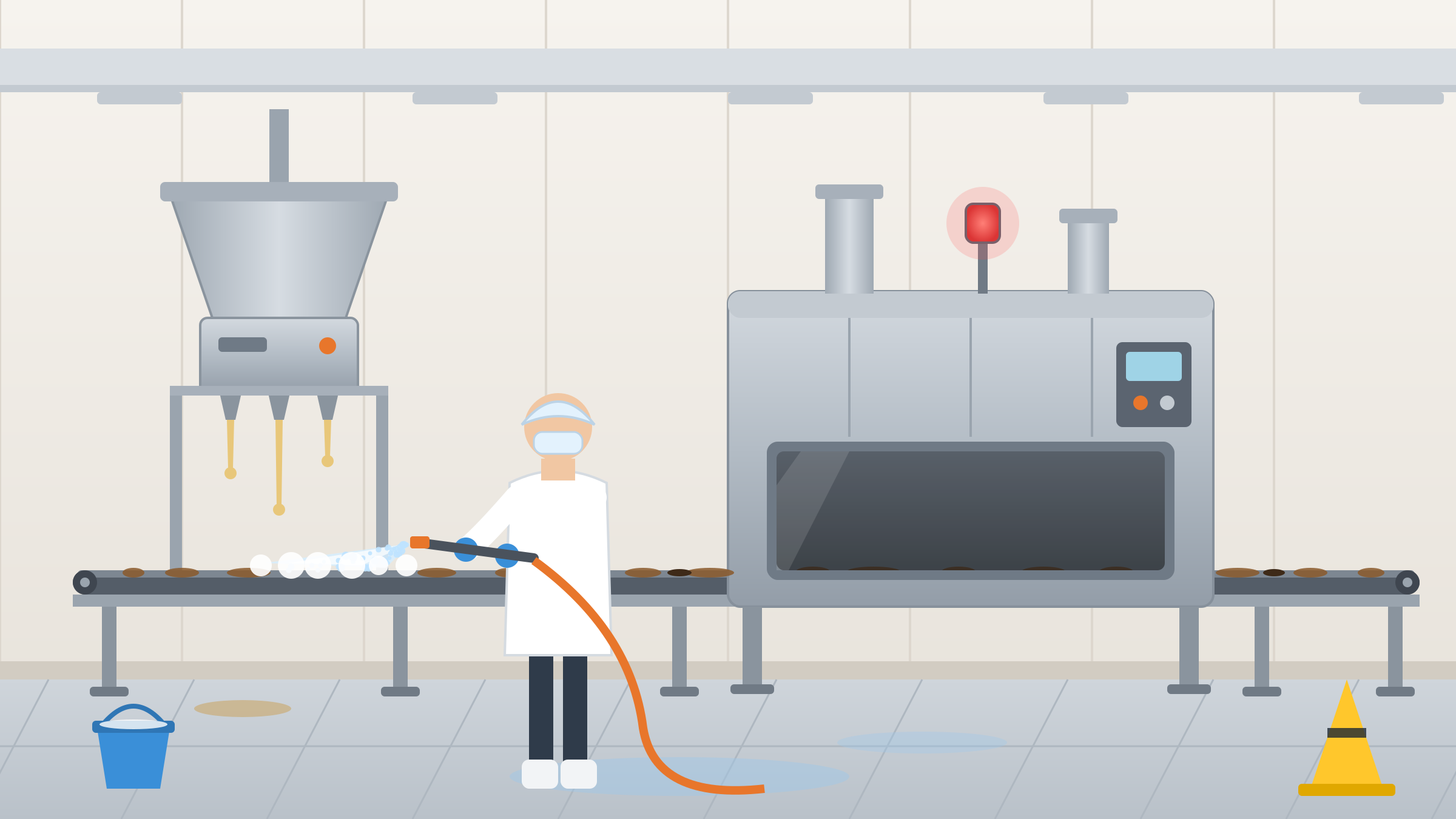
Industrial bakery sanitation: production line stopped for cleaning
Allergens and changeovers: the critical moment
For producers running multiple recipes on the same line, industrial bakery sanitation is also the key to managing allergens. Switching from a product with nuts to a nut-free one, for example, requires thorough and validated cleaning.
Here, the conflict becomes even sharper: more product variety means more changeovers, more changeovers mean more stops, and more stops mean less production.
The role of paper baking moulds
This is where the baking mould becomes part of the equation. A paper mould holds the product from depositing to the oven and all the way to the final consumer. Its role goes beyond giving shape to the product: it acts as a physical barrier between the batter and the line.
When the product stays inside the mould, fewer residues reach belts, bands and equipment. Less build-up means sanitation can be less frequent and less intensive, changeovers can be simpler, and the line can spend more time doing what it’s designed for: producing.
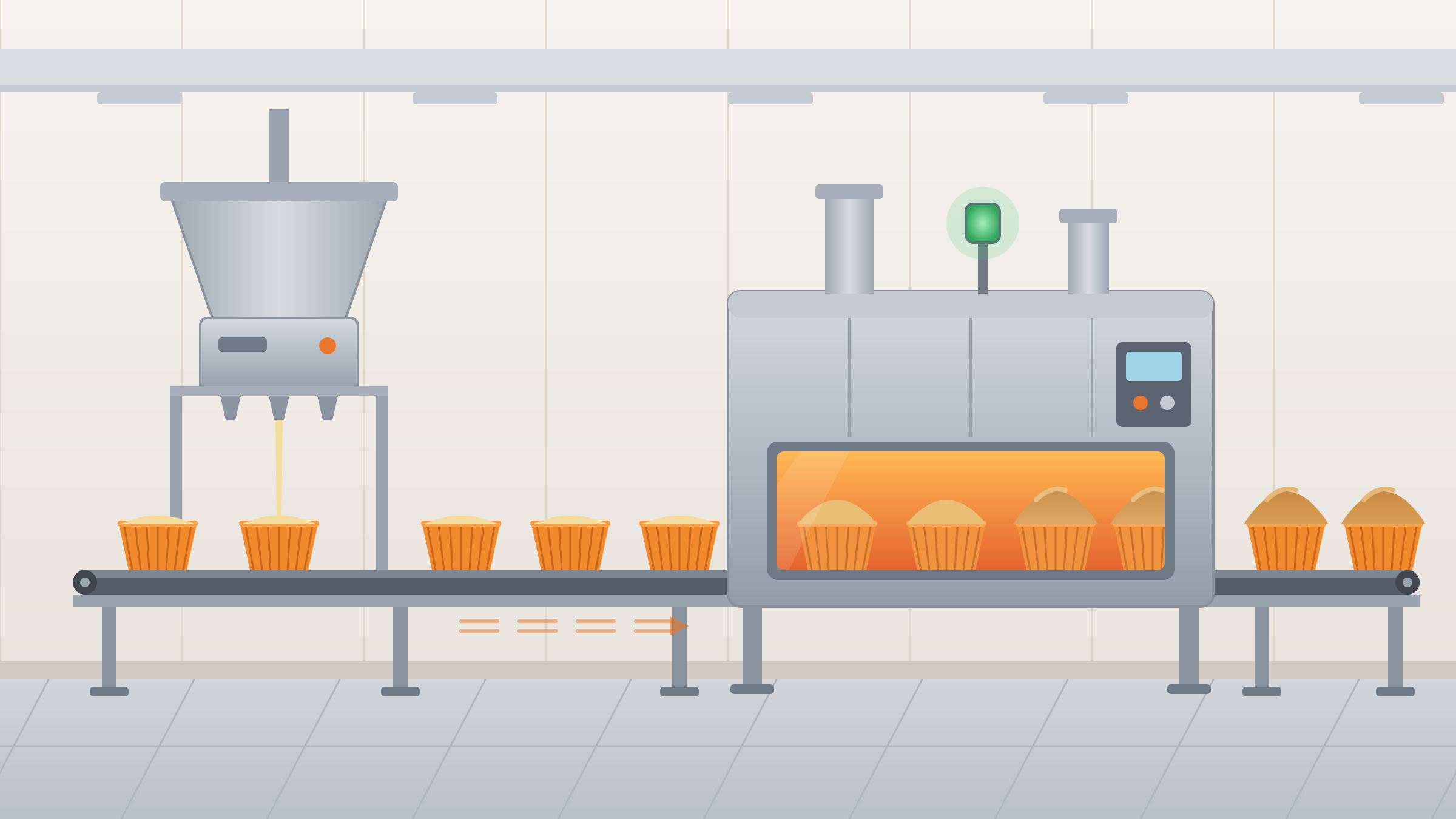
Industrial bakery line running with paper baking moulds
From conflict to compatibility
Cleaning will always be a necessary stop. The real question is how much of it is truly unavoidable and how much depends on process choices made upstream.
Rethinking what touches the line is one of the most effective ways to make industrial bakery sanitation and productivity work together, instead of against each other.
Want to find out how paper baking moulds can fit into your production process? Contact us to discuss your line and your products.
Stay tuned and follow us on LinkedIn!

 Ecopack Italy
 Ecopack Brazil
 Ecopack Canada
 Ecopack India
 Ecopack Tunisia


